Predictions and Nobodies
A warning from the past on climate change and wildfires.

In the fall of 1996, I was living in southern Colorado and working as a radio reporter. It was small-town journalism, so we didn’t really have beats; our beat was, whatever happened, and then if someone brought something cool/newsworthy to our attention, we covered that, too.
Most of the time, I sat in city council, county commission, and school board meetings — you’ll never guess what most of the big fights were about (hint: housing). But then on one of those luscious green-red-and-gold fall Colorado days, I got a call from Phil Miller. “Meet me out at the highway turn, we’re going for a walk, I have something to show you.”
“They’re going to kill probably most of the pine trees in the Rocky Mountains, and then those trees are going to burn.”
Phil was a retired forester with the Grand Mesa, Uncompahgre, and Gunnison National Forest (GMUG), and the founder of a local environmental group. He was scrappy and tough as nails, a product of having survived WWII and also, old guys in those giant mountains tended to be of a sturdier sort.
I drove out to the appointed spot and met Phil, and we walked diagonally up the hill into the north-facing pine forest on a low ridge, Phil’s septuagenarian legs popping with veins and stringy muscle. After a few minutes of bushwhacking, Phil stopped, took out a large knife, and carved a gash into the side of a tall spruce tree.
“Look inside there, what do you see.”
I saw a handful of larvae embedded just beneath the bark of the tree, and some small tunnels bored between their squirming bodies.
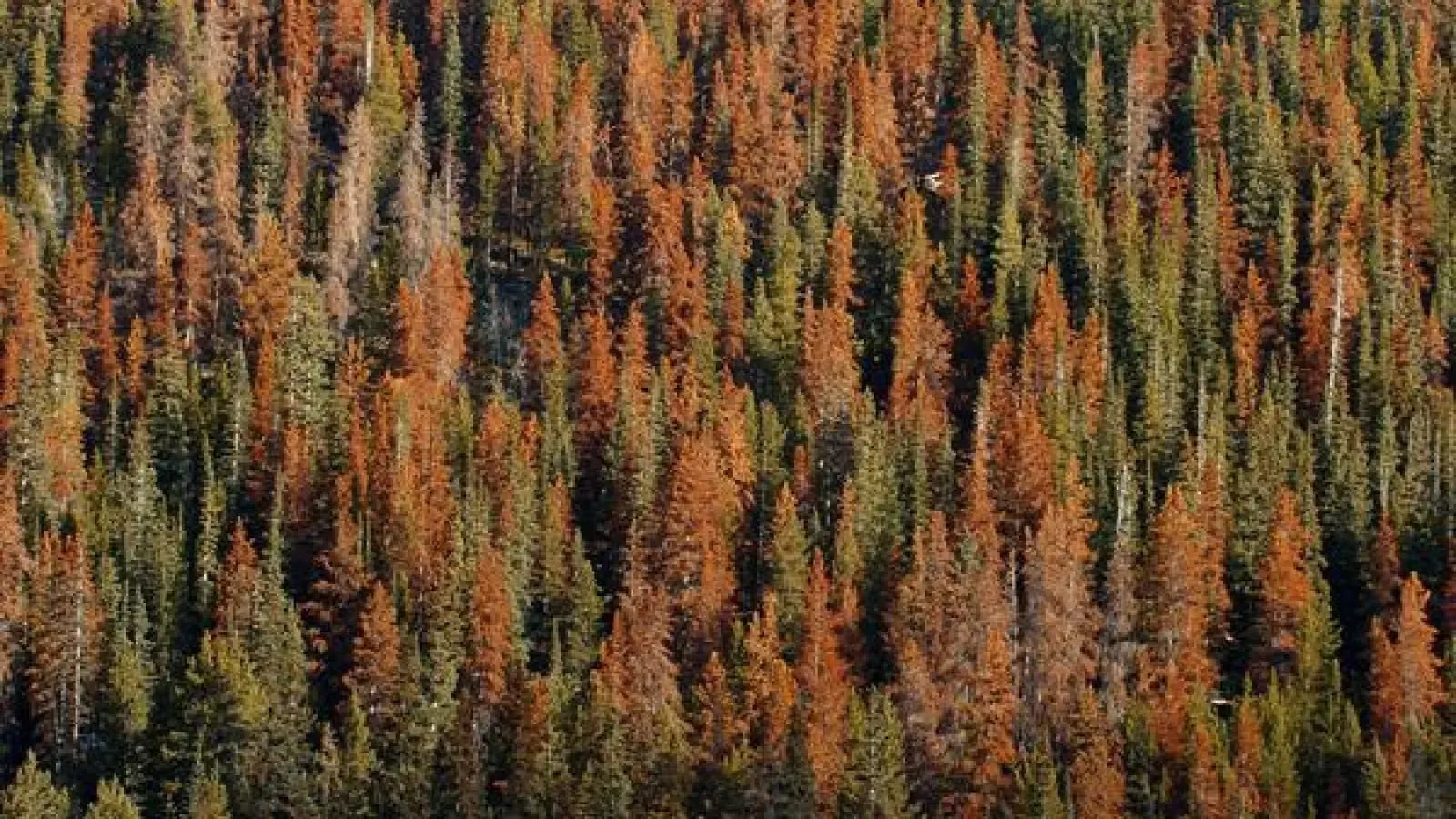
“That’s the larvae of the Western Balsam Fir Bark Beetle, and they’re going to kill probably most of the pine trees in the Rocky Mountains, and then those trees are going to burn.”
As a young reporter it was not unusual for me to get pretty random calls from folks who thought I should do a story about one particular thing. There was the guy convinced that the region’s experiment with early-stage WiFi technology (a line-of-site series of radio transmitters) was causing cancer; the tinkerer who’d converted his old Ford to run on used vegetable oil; the drunk who’d filed dozens of complaints against the District Attorney for violating due process.
Phil was a stand-up guy and deeply respected across the tense, high-conflict world of forest management in the 1990s West. Redwood Summer was still fresh in everyone’s memories, and the ongoing protests against old growth logging in the southern San Juan Mountains were close enough to visit on a day trip.
But even knowing what I knew about Phil and his background, his casual statement — “kill most of the pine trees in the Rockies” — seemed too much. He walked me through it.
“For thousands of years, winters here have always had multiple days, or even weeks, well below freezing — usually really far below freezing, the hard frosts below zero. Those freezes would kill most of the larvae for these beetles, and so come spring, they’d struggle to make it through one tree in an entire stand.”
“But the hard freezes are now fewer and farther between, and so more larvae are surviving, and spreading from tree to tree. There’s nothing that can stop them.”
The survey concluded that the beetle infestation claimed 500,000 new acres of trees last year, bringing the total number of acres up to 1.5 million since the first sign of the outbreak in 1996.
Officials described the infestation as a “catastrophic event” that has now crossed into Front Range areas. Beetle-kill rate in Colorado “catastrophic”

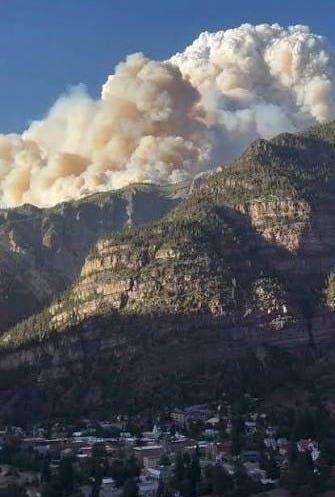
Four days ago, outside the San Juan County town of Ouray, Colorado, the Gold Mountain Fire erupted on a west-facing slope speckled with tinder-dry and beetle kill pines.
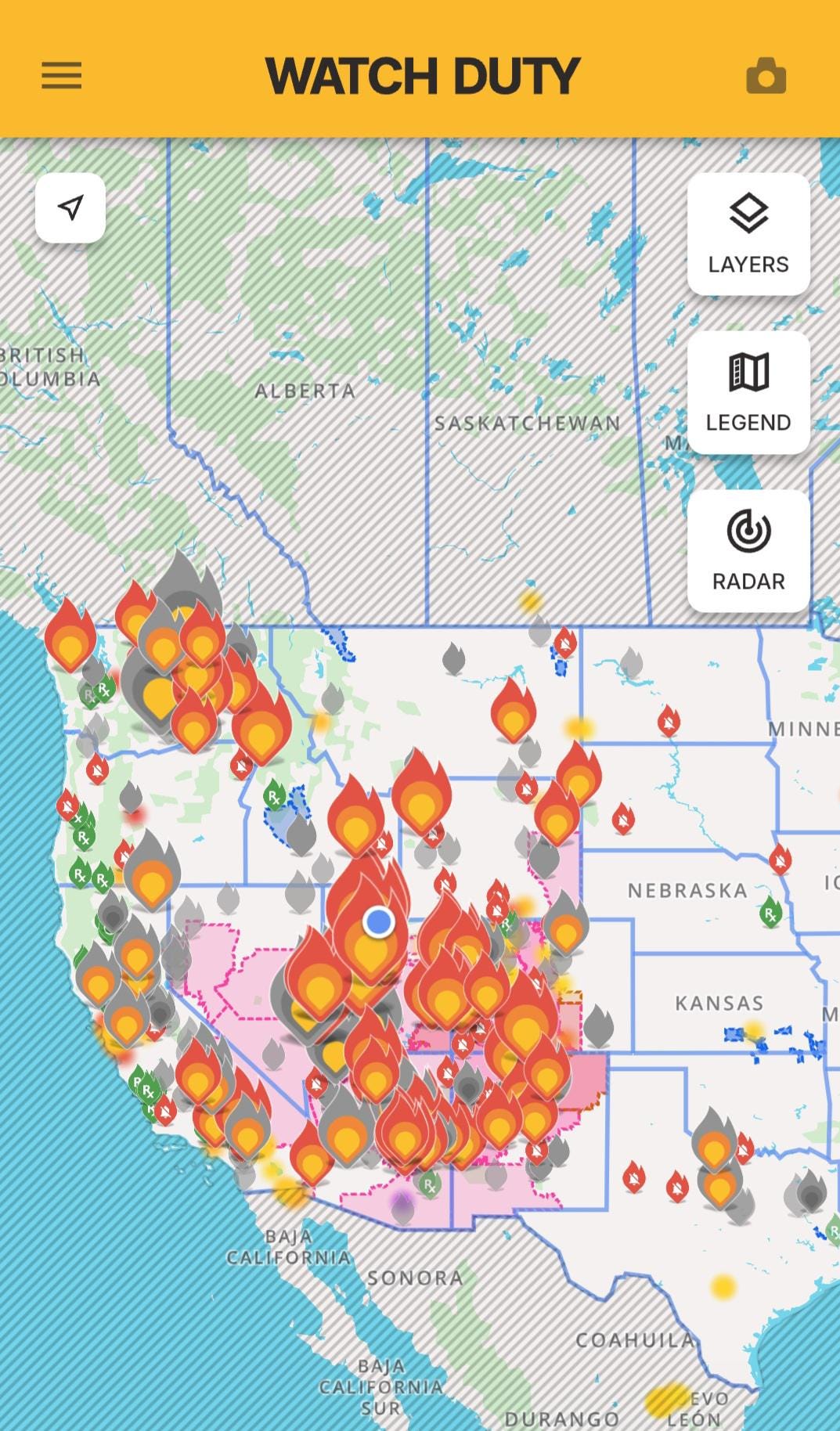
As we head into the 4th of July weekend, it’s only one of hundreds of fires burning across the Rocky Mountains and Colorado Plateau, in Utah, New Mexico, Wyoming, Arizona, Colorado, Idaho, and Montana.
And while these fires burn, the northeast is gripped in a crushing heat wave — the kind of thing that also was predicted decades ago by scientists like Phil Miller, who were merely sharing the fruits of their craft.
We didn’t listen. We’re still not listening. There’s a deep irony I learned from being in the news business — everybody prefers to read bad news (“if it bleeds, it leads,”) but nobody wants to adjust their behaviors or lifestyles when they read that the bad news is coming for them.
There’s really nobody in the United States who’s ready for climate change, even among people who claim to be concerned about climate. We’ve not begun to talk about the places people currently live — like the tinder-dry hillsides of California, Colorado, and Utah, or the extreme heat-risk suburbs of Houston, Dallas, Columbus, Miami — that might not be viable places for humans to live, this century.
Phil Miller died in 2015. Having moved to California many years prior, I didn’t find out about it for several years.
As the pine trees burn just over the ridge from where Phil and I took our walk, this story came rushing back. I’d told it several times, but never wrote it down for posterity. Seems like it’s time to start doing more of that.
You may not believe in climate change. But climate change believes in you.